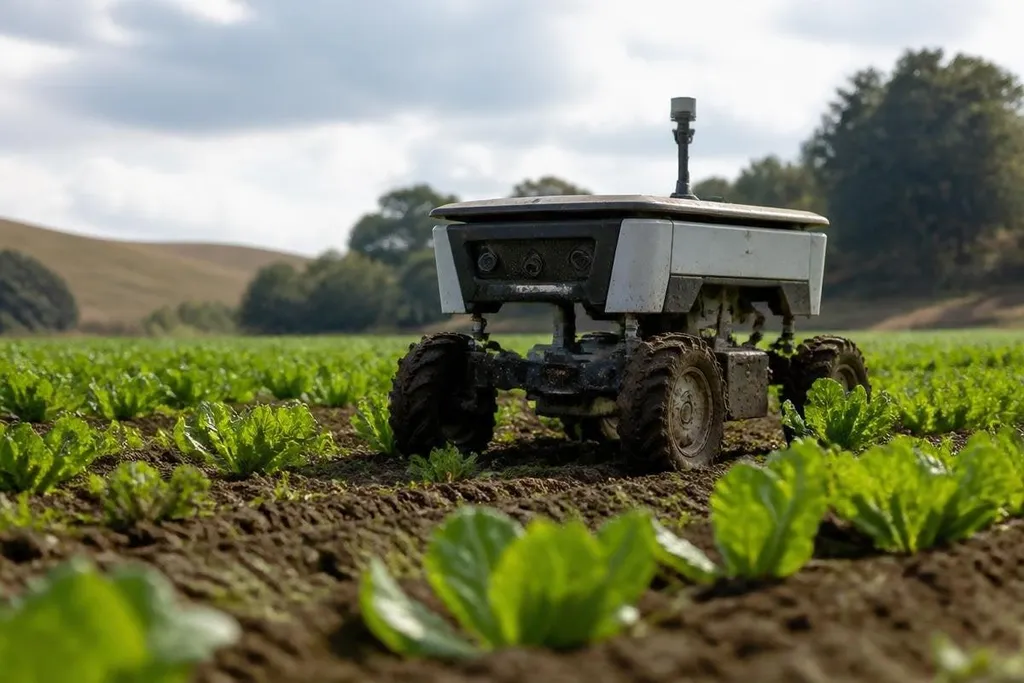
A robot that works in a field must handle dirt, changing light, uneven ground, and crops that rarely grow in neat rows.
The source material supplied for this article names no robot, trial, price, date, or measured result, so the useful question is how to judge the claims that deserve attention.
- Field work matters more than a polished demo
- A useful robot must finish a repeatable task
- Cost, repair, and crop damage decide adoption
What counts as real progress
An agricultural robot earns attention when it completes one clear job under farm conditions. That might mean removing weeds, checking plants, picking produce, moving loads, or collecting field data. The task must be stated plainly enough for a farm manager to compare it with current work.
The robot also needs a defined work area and operating plan. A machine that moves between crop rows faces different problems from one that works inside a greenhouse. Cameras may lose plant detail in harsh sunlight. Wheels can sink in wet soil. A gripper that handles one fruit may damage another.
Those details matter because a farm pays for finished work, not motion. A robot that spots weeds but leaves them in place may help a scouting team while doing little for a grower trying to cut hand labor.
The areas worth watching
Weeding is a useful test because the robot must tell a crop from nearby plants, move close to the soil, and avoid damage. The proof should state the crop, field conditions, work speed, and number of plants affected.
Harvesting is harder. Fruit changes size, color, and position, so a picking system needs careful sensing and a gripper that can release the crop without bruising it. A video of one successful pick says little unless the maker also gives the failure rate and the number of picks tested.
Field mapping has a lower physical burden, but its value still depends on the decision that follows. A camera can record plant stress, yet the farm needs to know how that data changes watering, spraying, or harvest plans. A report that stops at image collection leaves out the part that costs money.
Autonomous transport deserves the same test. The robot must reach the right place, avoid people and farm equipment, and keep working when the route changes. A short route on a clear surface does not prove that the system can handle a busy farm.
A crop-row test exposes gaps that a clear route can hide. Reports at Robot24 can name the machine, crop, field, task, and test date before the next section examines what remains unproven.
The proof gap
Agricultural robotics claims often stop before the farm manager can judge the result. A credible report should name the crop, the site, the task, the test period, and the result. It should also state what the robot could not do.
Price needs the same care. A machine cost is only one part of the bill. The farm may also need charging gear, staff training, software access, spare parts, and a person who can recover the robot after a fault. None of those figures are supplied here, so they should not be guessed.
The strongest opposing view is that early robots can still help by collecting data or proving a narrow task. That is fair. A narrow role can be useful when the farm knows the task, the labor cost, and the result it needs.
I'd rank a modest robot with public field results above a more capable machine shown only in a controlled demo.
A field-trial checklist
Use these checks before treating a new agricultural robot as ready for serious attention:
- Name the crop and state the field or greenhouse conditions.
- Record the task in a way a worker could repeat and measure.
- Ask for work speed, error rate, crop damage, and time lost to stops.
- Check who handles charging, repairs, recovery, and software updates.
- Compare the robot's cost with the farm's present method.
A claim that passes those checks can support a useful buying or pilot decision. A claim that cannot answer them belongs in the watch list, not the farm plan.
The next agricultural robot worth your time will come with a named crop, a measured task, a real operating site, and a price that includes the work around the machine.